Representative Image

LLG Drop Catcher, Straight Socket NS 14/23, Cone NS 14/23, Boro 3.3, Pack of 2

Cone[s]

Socket[s]

Specifications

Compare models
HS Code #
70172000
Cone[s]
NS 14/23
Material
Boro 3.3
Socket[s]
NS 14/23
UNSPSC
41104800

RM 253.00

Inc. GST

Supplier Stock: 2
Delivery: 2-4 weeks

Product description

The LLG Drop Catcher is made from high-quality Boro 3.3 glass, ensuring excellent durability and resistance to thermal shock. This drop catcher features a straight socket with an NS 14/23 connection and a cone with an NS 14/23 connection for secure fittings with laboratory apparatus. The Boro 3.3 glass construction makes it resistant to chemical corrosion, ensuring long-lasting performance in demanding laboratory environments. This drop catcher is perfect for use in distillation, chemical reactions, and other laboratory processes where efficient liquid collection is necessary.

Key Features:

  • Brand: LLG Labware
  • Material: Boro 3.3 glass for durability and chemical resistance
  • Neck Configuration: Straight socket NS 14/23 and cone NS 14/23 for compatibility with laboratory apparatus
  • Application: Ideal for distillation, chemical reactions, and liquid collection
  • Packaging: Pack of 2

This LLG Drop Catcher ensures precise liquid collection and separation, making it an essential tool for laboratory experiments that require accuracy and reliability.

Compare similar models

LLG-Drop catcher, straight socket NS 14/23, cone NS 14/23, boro 3.3 pack of 2

Manufacturer P/N

4686184

Part Number

4.686 184

Manufacturer

LLG Labware

Cone[s]

NS 14/23

LLG-Drop catcher, straight socket NS 29/32, cone NS 29/32, boro 3.3

Manufacturer P/N

4686185

Part Number

4.686 185

Manufacturer

LLG Labware

Cone[s]

NS 29/32

Frequently asked questions

It is made from high-quality Boro 3.3 glass, ensuring excellent durability and resistance to thermal shock. This drop catcher features a straight socket with an NS 14/23 connection and a cone with an NS 14/23 connection for secure fittings with laboratory apparatus. The Boro 3.3 glass construction makes it resistant to chemical corrosion, ensuring long-lasting performance in demanding laboratory environments. This drop catcher is perfect for use in distillation, chemical reactions, and other laboratory processes where efficient liquid collection is necessary.

Insights

Explore
Cleaning Lab Glassware: Removing Stubborn Residue

7 mins read

Cleaning Lab Glassware: Removing Stubborn Residue

Cleaning laboratory glassware properly is essential for accurate, safe, and repeatable lab work. This guide explains how to remove stubborn residue from beakers, flasks, bottles, volumetric glassware, and other lab glassware, including grease, dried salts, biological residue, stains, and burnt deposits. It also covers safe cleaning methods, common mistakes, drying and storage tips, and when damaged glassware should be replaced.
Read full story
How to Calibrate Your Pipettes to ISO 8655 Standards

7 mins read

How to Calibrate Your Pipettes to ISO 8655 Standards

Pipette calibration helps laboratories confirm that liquid handling results remain accurate, repeatable, and traceable. This guide explains how pipettes are calibrated to ISO 8655 standards, including gravimetric testing, environmental control, correct tip selection, volume testing, calibration records, and common mistakes to avoid. It also covers when to use in-house calibration and when an external calibration service may be more suitable.

Read full story
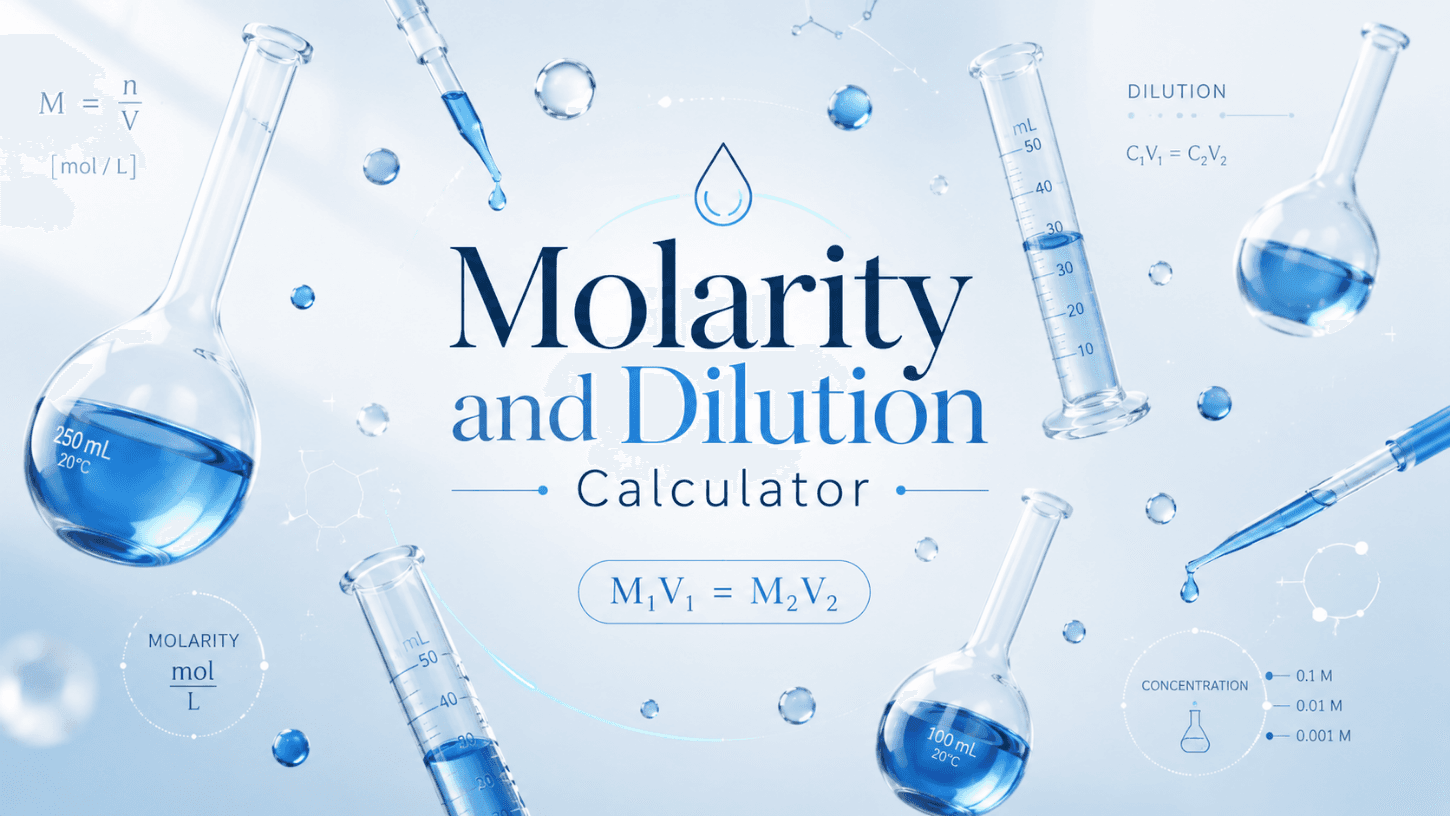
Molarity and Dilution Calculator

9 mins read

Molarity and Dilution Calculator

A free molarity and dilution calculator covering four essential lab calculations: C1V1=C2V2 dilution (solve for any unknown), molarity from mass, mass from molarity, and serial dilution table generation. Includes worked examples, a concentration units guide and step-by-step preparation instructions for every result.

Read full story
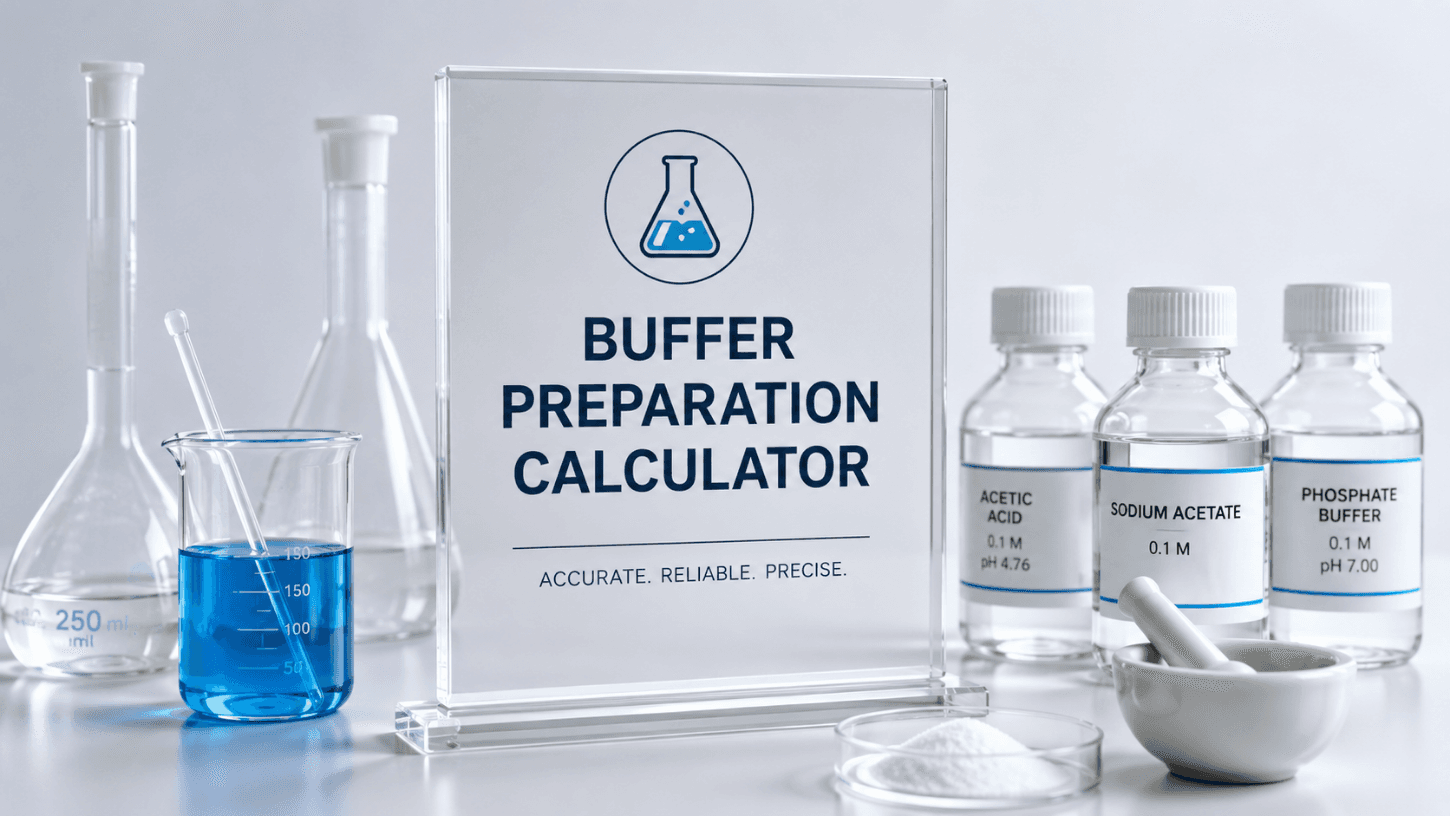
Buffer Preparation Calculator

9 mins read

Buffer Preparation Calculator

Free online buffer preparation calculator. Select your buffer system, enter target pH, concentration and volume, and get an exact lab-ready recipe with reagent masses and step-by-step instructions. Covers PBS, Tris-HCl, sodium phosphate, acetate, HEPES, MOPS and more.

Read full story