Representative Image

Hirschmann Minicaps, 10 µL, Length 30-32 mm DURAN, Pack of 10 x 100

Nominal capacity

Specifications

Compare models
HS Code #
70172000
Accuracy
0,5 ± R%
Length
32 mm
Material
DURAN® glass
Nominal capacity
10 µl
Precision
1,0 ≤·VK%
UNSPSC
41121709

RM 984.50

Inc. GST

Available soon

Product description

The Hirschmann Minicaps 10 µl, Length 30-32 mm DURAN, Pack Of 10x100 are sodium heparinized capillary tubes designed for accurate small-volume sample handling in laboratory applications. Manufactured from DURAN glass, these minicaps provide reliable performance for precise liquid collection and transfer.

Key Features:

  • Brand: Hirschmann
  • Capacity: 10 µl
  • Length: 30-32 mm
  • Material: DURAN glass
  • Treatment: Sodium heparinized
  • Application: Suitable for precise laboratory sample collection and transfer
  • Packaging: Pack of 10x100

These Hirschmann minicaps are ideal for laboratories requiring dependable, sodium heparinized capillary tubes for accurate micro-volume handling.

Compare similar models

Minicaps 10 µl, length 30-32 mm DURAN, pack of 10x100

Manufacturer P/N

9000210

Part Number

4.699 931

Manufacturer

Hirschmann

Nominal capacity

10 µl

Minicaps 25 µl, length 30-32 mm DURAN, pack of 10x100

Manufacturer P/N

9000225

Part Number

4.699 933

Manufacturer

Hirschmann

Nominal capacity

25 µl

Minicaps 5 µl length:30-32, DURAN, NA-HEP. pack of 10x100

Manufacturer P/N

9000205

Part Number

4.699 930

Manufacturer

Hirschmann

Nominal capacity

5 µl

Frequently asked questions

The Minicaps 10 µl is designed for precise laboratory sample collection and transfer. The stated format and features make the product suitable for routine laboratory work within that application.

Insights

Explore
Cleaning Lab Glassware: Removing Stubborn Residue

7 mins read

Cleaning Lab Glassware: Removing Stubborn Residue

Cleaning laboratory glassware properly is essential for accurate, safe, and repeatable lab work. This guide explains how to remove stubborn residue from beakers, flasks, bottles, volumetric glassware, and other lab glassware, including grease, dried salts, biological residue, stains, and burnt deposits. It also covers safe cleaning methods, common mistakes, drying and storage tips, and when damaged glassware should be replaced.
Read full story
How to Calibrate Your Pipettes to ISO 8655 Standards

7 mins read

How to Calibrate Your Pipettes to ISO 8655 Standards

Pipette calibration helps laboratories confirm that liquid handling results remain accurate, repeatable, and traceable. This guide explains how pipettes are calibrated to ISO 8655 standards, including gravimetric testing, environmental control, correct tip selection, volume testing, calibration records, and common mistakes to avoid. It also covers when to use in-house calibration and when an external calibration service may be more suitable.

Read full story
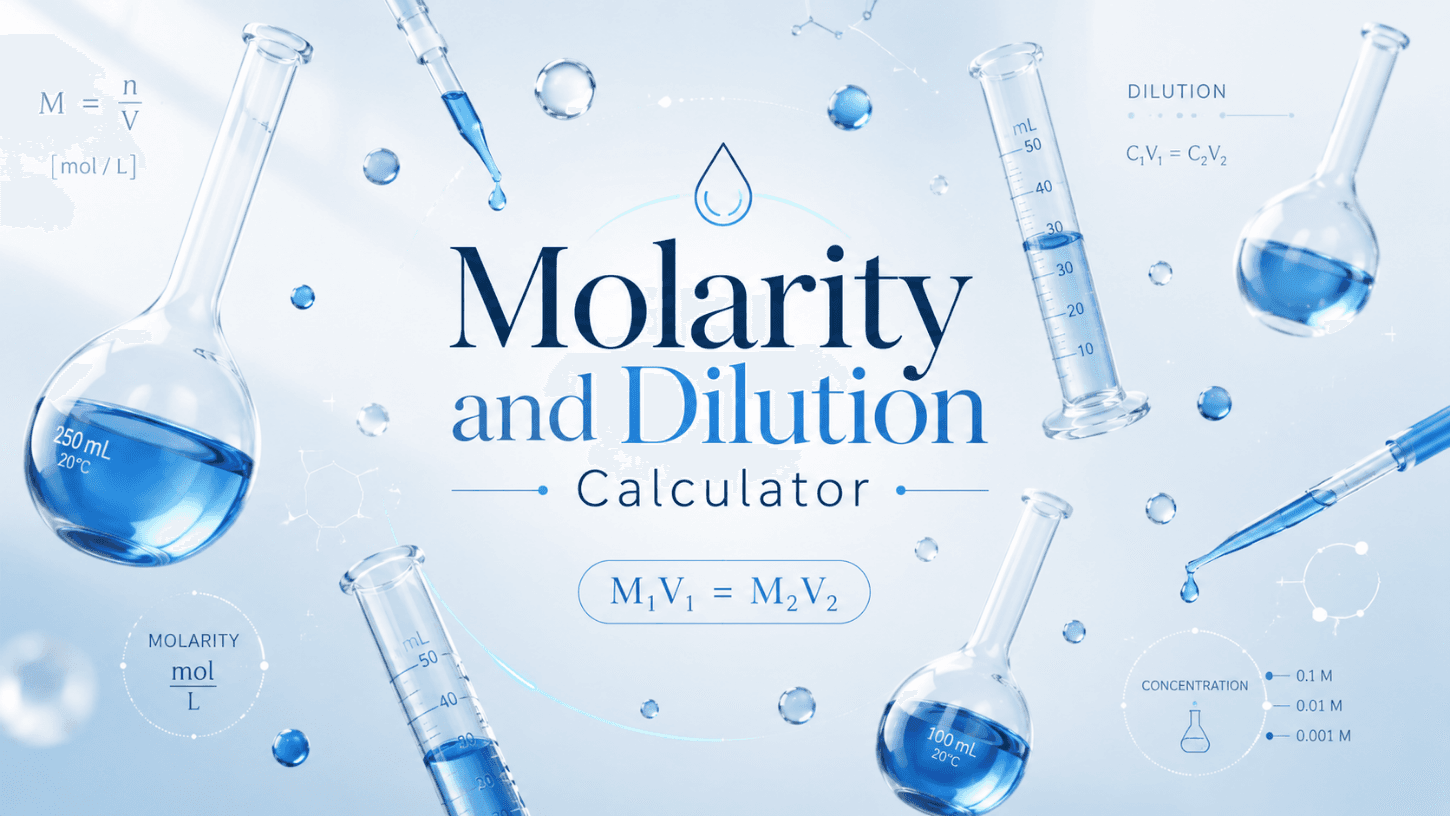
Molarity and Dilution Calculator

9 mins read

Molarity and Dilution Calculator

A free molarity and dilution calculator covering four essential lab calculations: C1V1=C2V2 dilution (solve for any unknown), molarity from mass, mass from molarity, and serial dilution table generation. Includes worked examples, a concentration units guide and step-by-step preparation instructions for every result.

Read full story
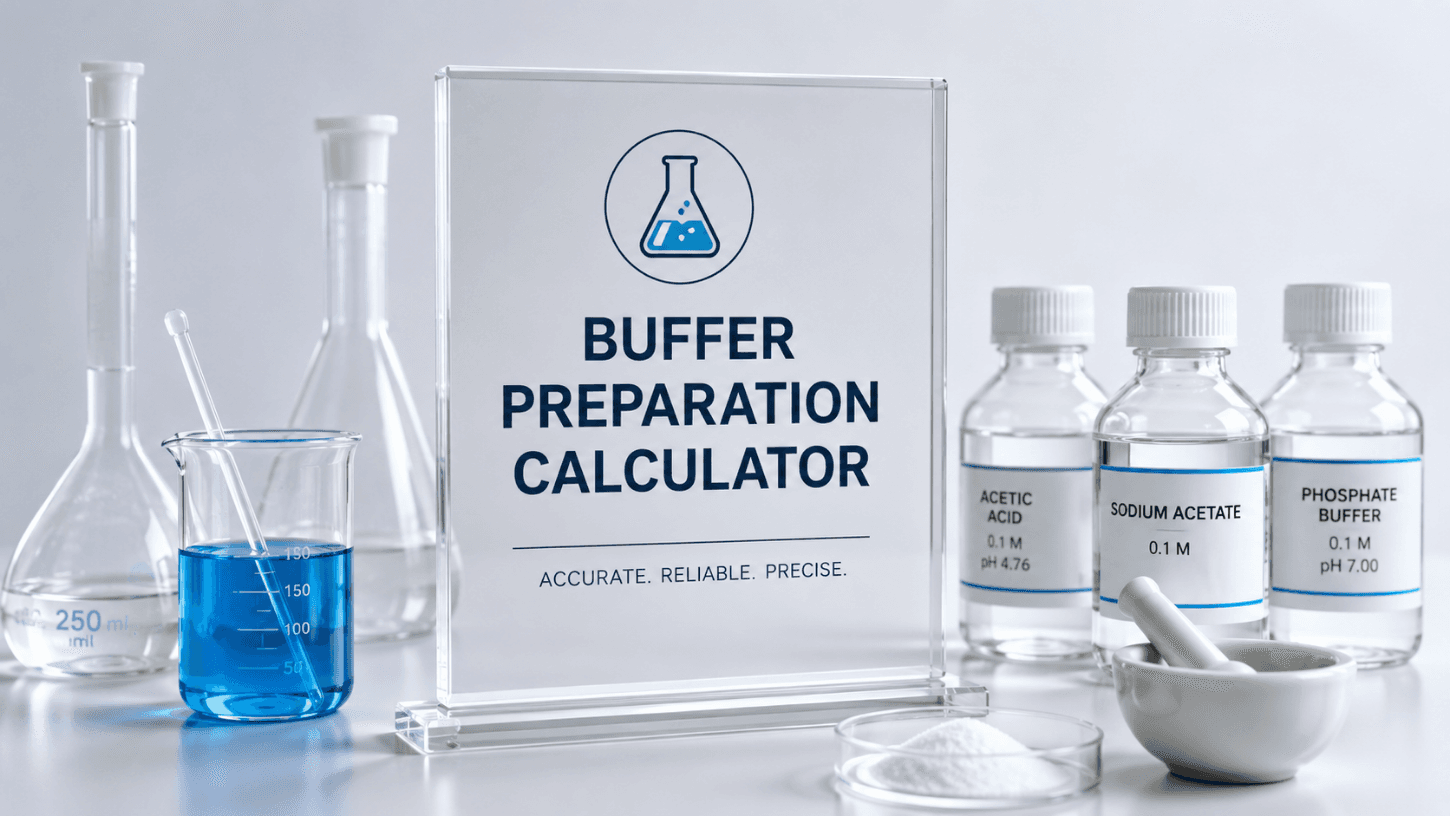
Buffer Preparation Calculator

9 mins read

Buffer Preparation Calculator

Free online buffer preparation calculator. Select your buffer system, enter target pH, concentration and volume, and get an exact lab-ready recipe with reagent masses and step-by-step instructions. Covers PBS, Tris-HCl, sodium phosphate, acetate, HEPES, MOPS and more.

Read full story