The Ultimate Guide to Laboratory Glassware: Beakers, Flasks & More
1 min read
This comprehensive guide explores the most essential types of laboratory glassware—beakers, flasks, test tubes, and petri dishes—their specific applications, the difference between Boro 3.3 and soda-lime glass, and expert tips to maximise lifespan and performance.
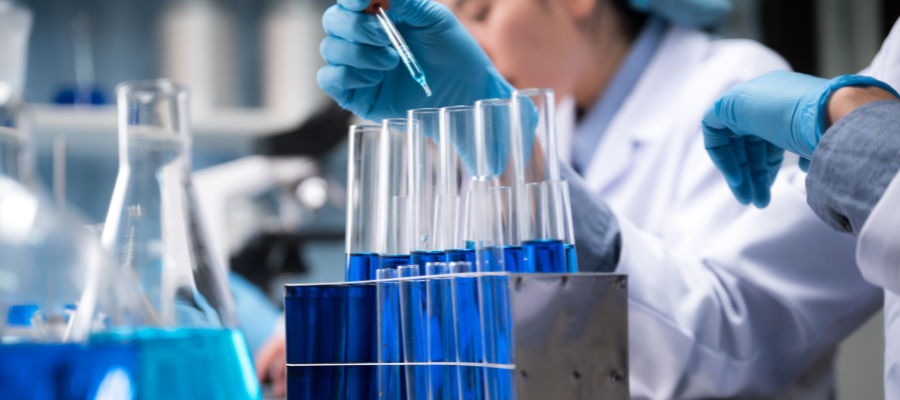
Laboratory glassware is the backbone of every experiment—used in schools, research facilities, and industrial labs worldwide. Whether it’s mixing chemicals in a beaker, measuring volumes in a volumetric flask, or cultivating cells in a petri dish, the right glassware ensures accuracy, safety, and reproducibility.
This comprehensive guide explores the most essential types of laboratory glassware - beakers, flasks, test tubes, and petri dishes—their specific applications, the difference between Boro 3.3 and soda-lime glass, and expert tips to maximise lifespan and performance.
At LabFriend, you’ll find premium-quality glassware from industry-leading brands such as DWK Life Sciences, BRAND, and LLG Labware, trusted by scientists and educators across Australia and New Zealand.
1. Why Laboratory Glassware Matters
Accurate results in any laboratory depend heavily on the quality and suitability of glassware. Beyond being simple containers, laboratory glassware must resist chemical corrosion, withstand high thermal stress, and maintain precise dimensions to ensure accurate measurements.
High-quality glassware, particularly borosilicate glass (Boro 3.3), provides superior resistance to heat and chemicals, making it ideal for most scientific applications. Laboratories that compromise on glass quality often face issues such as contamination, breakage, and inaccurate measurements—all of which can invalidate experimental data.
2. Understanding Glass Materials: Boro 3.3 vs Soda-Lime
Two primary types of glass dominate laboratory use:
-
Borosilicate Glass (Boro 3.3)
Containing silica and boron trioxide, Boro 3.3 glass is known for its excellent thermal resistance and low coefficient of expansion. It can withstand sudden temperature changes and harsh chemicals, making it perfect for demanding lab environments.
Brands like DWK Life Sciences DURAN® and BRAND exclusively use borosilicate glass for precision and reliability. -
Soda-Lime Glass
More affordable and commonly used in disposable labware, soda-lime glass is suitable for general-purpose applications but lacks the heat and chemical resistance of borosilicate.
When choosing glassware, opt for Boro 3.3 for consistent accuracy, durability, and longevity—especially in research or industrial labs.
3. Essential Types of Laboratory Glassware
3.1 Beakers
Beakers are among the most common pieces of glassware. They feature a cylindrical body, a flat bottom, and a spout for easy pouring. Available in various capacities (10 mL to several litres), beakers are used for mixing, heating, and decanting liquids.
Common Types:
-
Low-form beakers (Griffin style) – ideal for heating and stirring.
-
Tall-form beakers (Berzelius style) – used for precise measurement and titration setups.
Recommended brands:
-
LLG Labware Beakers (Boro 3.3) – affordable and durable for everyday lab use.
-
DWK DURAN® Beakers – high thermal shock resistance and excellent optical clarity.
3.2 Conical Flasks (Erlenmeyer Flasks)
Conical flasks have a wide base and narrow neck, allowing easy swirling without spillage—perfect for mixing, culturing, or titration. Their design also reduces evaporation and contamination risk.
Applications:
-
Microbial and chemical culturing
-
Titrations
-
Solvent storage and preparation
Top options:
-
BRAND Erlenmeyer Flasks – precise graduations and reinforced rims.
-
LLG Conical Flasks – cost-effective options for educational and routine labs.
3.3 Volumetric Flasks
Volumetric flasks are critical for preparing precise solutions. Their long necks and single calibration marks ensure accurate volume measurement, usually within ±0.1 mL.
Uses:
-
Standard solution preparation
-
Analytical chemistry and titration setups
Featured brands:
-
BRAND BLAUBRAND® Volumetric Flasks – individually calibrated for Class A accuracy.
-
DWK DURAN® Volumetric Flasks – meet ISO 1042 standards for precision.
3.4 Test Tubes
Test tubes are simple cylindrical glass tubes used for holding, mixing, or heating small liquid samples. They are often made of Boro 3.3 glass to resist sudden thermal changes during heating and cooling cycles.
Variations include:
-
Plain open-ended tubes
-
Screw-cap tubes for sample storage
-
Centrifuge-compatible tubes for biological samples
Recommended brands:
-
BRAND Test Tubes – high transparency and uniform wall thickness.
-
LLG Glass Test Tubes – versatile and economical choice for teaching labs.
3.5 Petri Dishes
Petri dishes, traditionally made of glass or polystyrene, are used to culture microorganisms, cells, or small plant specimens. Glass petri dishes are reusable and autoclavable, while plastic ones are designed for single-use sterile applications.
Best picks:
-
3M™ Petri Dishes – consistent quality and sterility for microbiological testing.
-
BRAND Glass Petri Dishes – reusable, eco-friendly, and precision-made for repeat use.
4. Laboratory Glassware Accessories
Complementary accessories such as stoppers, adapters, funnels, and clamps are essential for safe and efficient glassware use. For instance, ground-glass joints ensure airtight connections between flasks and condensers, while rubber or PTFE stoppers prevent contamination.
Brands like LLG Labware and DWK Life Sciences offer a complete range of accessories compatible with standard laboratory setups.
5. Cleaning and Maintenance Tips
Proper maintenance extends the lifespan of your laboratory glassware and prevents contamination.
Best practices include:
-
Rinse immediately after use to prevent residue buildup.
-
Use neutral pH detergents and avoid abrasive brushes.
-
Dry glassware in a dust-free environment or dedicated oven.
-
Inspect regularly for cracks or chips that can compromise safety.
-
For critical experiments, use acid baths or ultrasonic cleaners for deep cleaning.
Pro Tip: Autoclaving Boro 3.3 glassware at 121°C for 20 minutes is safe and effective for sterilisation.
6. Why Choose Premium Brands
Selecting glassware from reliable manufacturers ensures compliance with ISO standards, traceability, and consistent performance.
-
DWK Life Sciences (DURAN®, Kimble, Wheaton) – globally recognised for high-precision Boro 3.3 glass.
-
BRAND – renowned for accuracy and German engineering in volumetric and measurement glassware.
-
LLG Labware – delivers cost-effective, high-quality solutions for routine lab use.
These brands combine decades of expertise, ensuring every product meets the rigorous demands of modern laboratories.
7. Where to Buy Laboratory Glassware in Australia
LabFriend.com.au is Australia’s trusted online destination for scientific glassware and laboratory supplies. With an extensive catalogue featuring DWK, BRAND, LLG, Thermo Scientific, and IKA, LabFriend supports everyone—from universities and research institutes to industrial laboratories—with fast delivery and expert support.
Each product page includes detailed specifications, pricing, and compatibility information to help you make informed purchasing decisions.
8. Final Thoughts
The right laboratory glassware forms the foundation of accurate, reliable, and reproducible scientific results. Investing in high-quality glassware not only enhances experimental performance but also reduces long-term costs through durability and reusability.
From beakers and conical flasks to volumetric precision instruments, choosing premium brands like DWK, BRAND, and LLG Labware ensures your laboratory operates with confidence and precision.
Visit LabFriend to explore Australia’s widest range of laboratory glassware and accessories—trusted by professionals, designed for performance.
Frequently asked questions
Most orders ship within 24 hours and arrive in 3–5 business days depending on your location.
_0.png&w=3840&q=75)