Representative Image

Buddeberg Joint Grease, 80g Tube

Brand:Buddeberg

Specifications

HS Code #
34039900
Max. temp. resistance
200 °C
Min. temp. resistance
-30 °C
Silicone free
Yes
Temperature resistance
-30 ... 200 °C
UNSPSC
12181501
Weight
80 g

RM 387.20

Inc. GST

Supplier Stock: 117
Delivery: 2-4 weeks

Product description

The Buddeberg Joint Grease is a high-quality lubricant designed for all glass joints. This transparent, vacuum-tight grease is water-washable and water-soluble, maintaining consistent viscosity between -30°C and 200°C without solidifying. Compatible with most elastomers, it ensures reliable performance in various laboratory applications.

Key Features:

  • Brand: Buddeberg
  • Material: High-quality joint grease
  • Compatibility: Suitable for all glass joints and most elastomers
  • Temperature Range: Maintains consistency between -30°C and 200°C
  • Packaging: 80g tube

This grease is an essential accessory for laboratories requiring efficient, reliable, and high-quality lubrication for glass joints.

Downloads

More items to explore

Joint grease, K.W.S

ProductTemperature resistanceMax. temp. resistanceMfr#Part#AvailabilityPrice
-40 ... 200 °C200 °C0049.116 924In stockRM 169.40

Rotating joint grease, silicone-free, Alsirol

ProductTemperature resistanceMax. temp. resistanceMfr#Part#AvailabilityPrice
-40 ... 200 °C200 °C0059.116 925In stockRM 211.75

Frequently asked questions

It is a high-quality lubricant designed for all glass joints. This transparent, vacuum-tight grease is water-washable and water-soluble, maintaining consistent viscosity between -30°C and 200°C without solidifying. Compatible with most elastomers, it ensures reliable performance in various laboratory applications.

Insights

Explore
Cleaning Lab Glassware: Removing Stubborn Residue

7 mins read

Cleaning Lab Glassware: Removing Stubborn Residue

Cleaning laboratory glassware properly is essential for accurate, safe, and repeatable lab work. This guide explains how to remove stubborn residue from beakers, flasks, bottles, volumetric glassware, and other lab glassware, including grease, dried salts, biological residue, stains, and burnt deposits. It also covers safe cleaning methods, common mistakes, drying and storage tips, and when damaged glassware should be replaced.
Read full story
How to Calibrate Your Pipettes to ISO 8655 Standards

7 mins read

How to Calibrate Your Pipettes to ISO 8655 Standards

Pipette calibration helps laboratories confirm that liquid handling results remain accurate, repeatable, and traceable. This guide explains how pipettes are calibrated to ISO 8655 standards, including gravimetric testing, environmental control, correct tip selection, volume testing, calibration records, and common mistakes to avoid. It also covers when to use in-house calibration and when an external calibration service may be more suitable.

Read full story
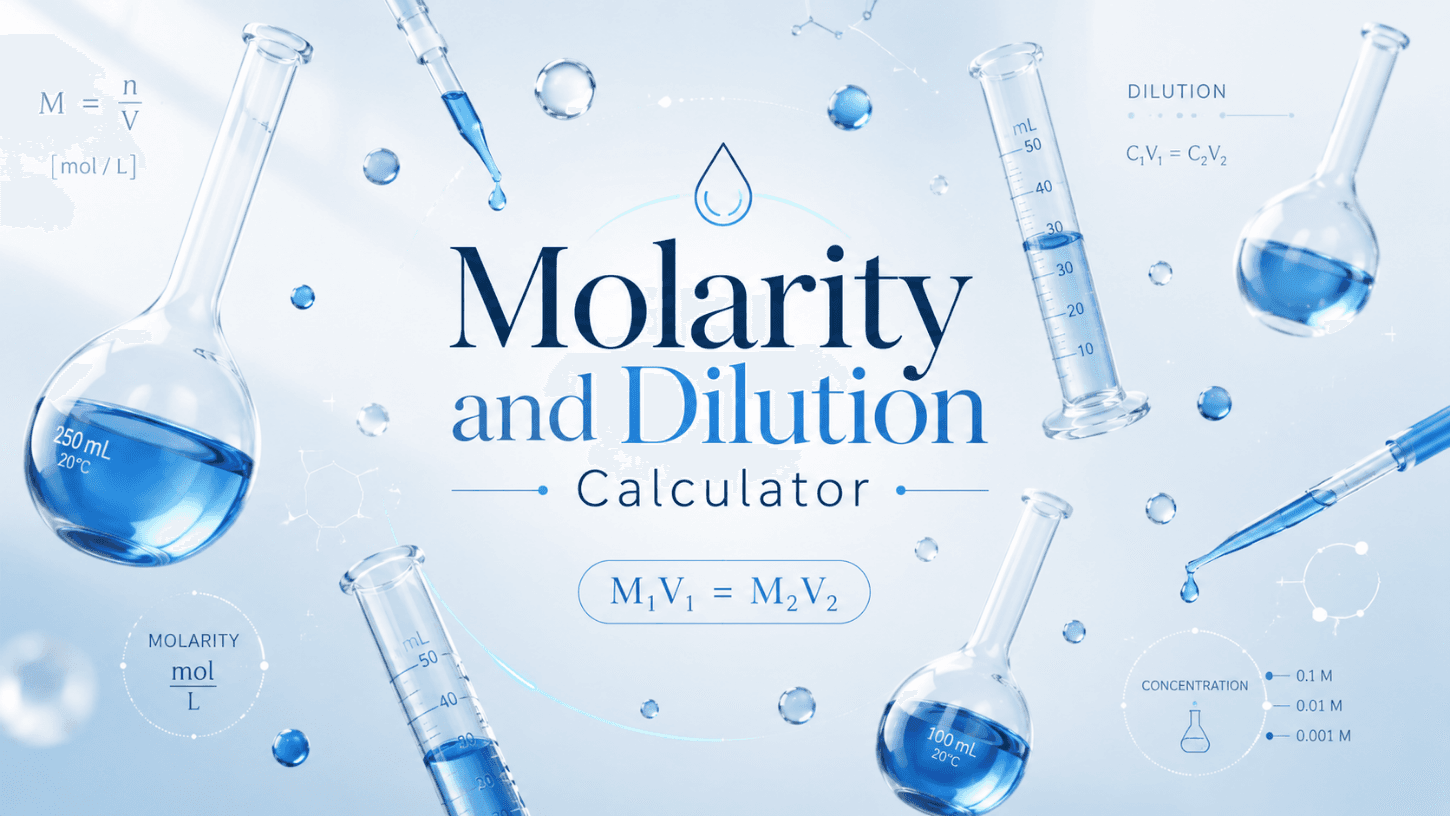
Molarity and Dilution Calculator

9 mins read

Molarity and Dilution Calculator

A free molarity and dilution calculator covering four essential lab calculations: C1V1=C2V2 dilution (solve for any unknown), molarity from mass, mass from molarity, and serial dilution table generation. Includes worked examples, a concentration units guide and step-by-step preparation instructions for every result.

Read full story
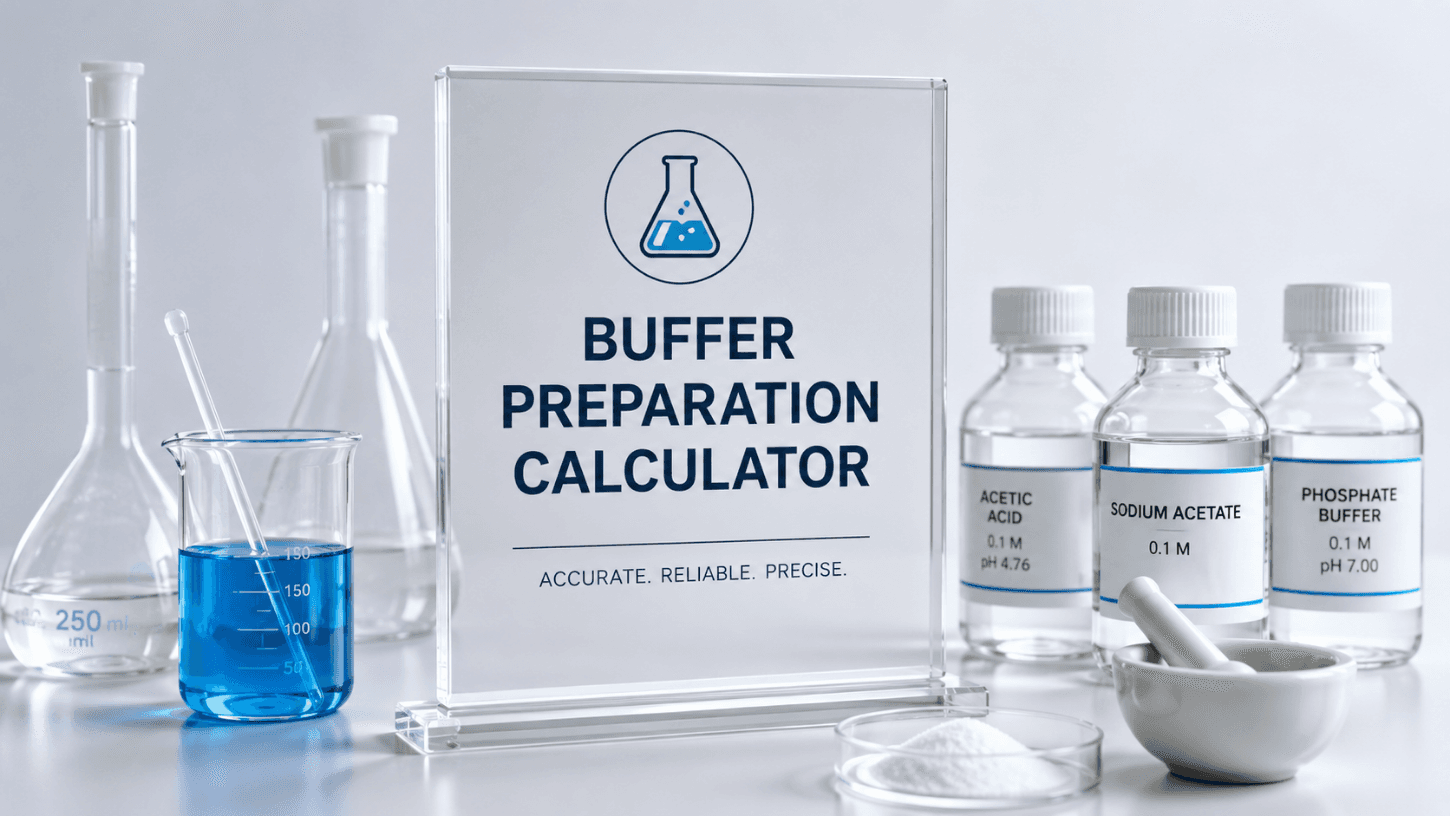
Buffer Preparation Calculator

9 mins read

Buffer Preparation Calculator

Free online buffer preparation calculator. Select your buffer system, enter target pH, concentration and volume, and get an exact lab-ready recipe with reagent masses and step-by-step instructions. Covers PBS, Tris-HCl, sodium phosphate, acetate, HEPES, MOPS and more.

Read full story