

Share :
The Scientist’s Guide to DWK Life Sciences: Precision, Reliability, and Sustainability
Updated On 12/02/2025

DWK Life Sciences is more than just a manufacturer. It represents a global benchmark in laboratory glassware and scientific packaging. Formed through the merger of three renowned industry brands, DURAN®, WHEATON®, and KIMBLE®, DWK supports research and diagnostic laboratories across Australia and around the world.
From university research facilities and pharmaceutical laboratories to environmental testing and industrial R&D, DWK glassware is trusted wherever reliability, chemical resistance, and precision are essential.
Who Is DWK Life Sciences?
DWK Life Sciences combines more than a century of scientific glass manufacturing expertise. By bringing together German engineering from DURAN with the American laboratory heritage of DWK KIMBLE and WHEATON, DWK has developed one of the most comprehensive portfolios of laboratory glassware available worldwide.
Today, DWK operates multiple manufacturing facilities globally and produces thousands of products used across analytical chemistry, biotechnology, pharmaceutical research, and academic laboratories.
The flagship material behind many of these products is DURAN® Borosilicate 3.3 glass. This Type I neutral glass complies with internationally recognised standards such as ISO 3585 and is commonly referenced alongside ASTM E438, which defines properties and classifications for laboratory apparatus glass.
Why Laboratories Trust DWK (The Technical Edge)
Reliable scientific results begin with reliable laboratory equipment. DWK glassware is engineered to minimise variables that could affect experiments and analytical measurements.
- Thermal shock resistance: Borosilicate 3.3 glass has a very low thermal expansion coefficient, allowing it to tolerate rapid temperature changes. This makes it ideal for heating applications involving laboratory beakers and laboratory flasks.
- Superior chemical inertness: Borosilicate glass provides excellent resistance to acids, water, and many organic solvents. This minimises ion leaching and helps prevent contamination of sensitive samples stored in reagent bottles.
- Durability and sustainability: High-quality laboratory glassware can withstand repeated sterilisation and autoclave cycles. Many laboratories are increasingly adopting durable glassware to reduce disposable plastic waste. Research on sustainable laboratory practices highlights how equipment choices can reduce environmental impact in research environments (Green Labs sustainability research).
Why DWK Glassware Performs Better Than Standard Soda-Lime Glass
DWK laboratory glassware is typically manufactured from borosilicate 3.3 glass, which provides significantly better performance than standard soda-lime glass used in lower-cost laboratory equipment.
First, borosilicate glass offers superior thermal stability. Its low expansion coefficient allows the glass to withstand high temperatures and rapid temperature changes without cracking. Soda-lime glass, by comparison, expands more quickly when heated and is therefore more prone to thermal shock.
Second, borosilicate glass provides stronger chemical resistance. It is less reactive with acids, solvents, and laboratory reagents, making it ideal for analytical chemistry, pharmaceutical testing, and sample storage.
These characteristics are one of the main reasons borosilicate glass remains the preferred material for laboratory apparatus worldwide.
Popular DWK Solutions in Australian Laboratories
Across Australian research institutions, universities, pharmaceutical laboratories, and environmental testing facilities, several DWK product lines are widely used.
- DURAN® GL 45 Laboratory Bottles
Widely used for reagent preparation and media storage. Browse related products including narrow mouth bottles and reagent bottles. - KIMBLE® Volumetric Glassware
High-precision glassware used in analytical chemistry including measuring cylinders and laboratory cylinders. - WHEATON® Chromatography Vials
Designed for chromatography workflows and sample analysis. Explore our range of vials and septa and laboratory vials. - DURAN® Laboratory Beakers and Flasks
Essential equipment for mixing, heating, and preparing laboratory solutions. Browse our range of laboratory beakers and laboratory flasks.
Why Sourcing DWK Through LabFriend Makes Sense
LabFriend provides laboratories across Australia with access to globally recognised brands including DWK Life Sciences and DWK KIMBLE. By sourcing laboratory equipment through LabFriend, laboratories gain access to trusted scientific brands alongside a broad selection of laboratory supplies.
- Competitive pricing on essential laboratory glassware.
- Fast Australia-wide shipping to support laboratory workflows.
- Technical support from specialists familiar with laboratory glassware standards.
Conclusion
DWK Life Sciences continues to set the global benchmark for laboratory glassware performance and reliability. Whether you are conducting analytical chemistry, preparing culture media, or storing valuable samples, DWK products help ensure durability, precision, and reproducible scientific results.
Ready to upgrade your laboratory glassware? Explore the complete range of DWK Life Sciences products available at LabFriend.
Related Stories
_0.png&w=3840&q=75)
Cleaning Lab Glassware: Removing Stubborn Residue
Cleaning laboratory glassware properly is essential for accurate, safe, and repeatable lab work. This guide explains how to remove stubborn residue from beakers, flasks, bottles, volumetric glassware, and other lab glassware, including grease, dried salts, biological residue, stains, and burnt deposits. It also covers safe cleaning methods, common mistakes, drying and storage tips, and when damaged glassware should be replaced.
How to Calibrate Your Pipettes to ISO 8655 Standards
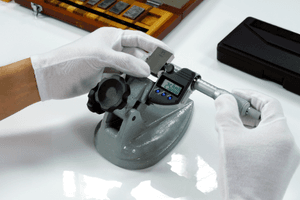
Pipette calibration helps laboratories confirm that liquid handling results remain accurate, repeatable, and traceable. This guide explains how pipettes are calibrated to ISO 8655 standards, including gravimetric testing, environmental control, correct tip selection, volume testing, calibration records, and common mistakes to avoid. It also covers when to use in-house calibration and when an external calibration service may be more suitable.
Molarity and Dilution Calculator
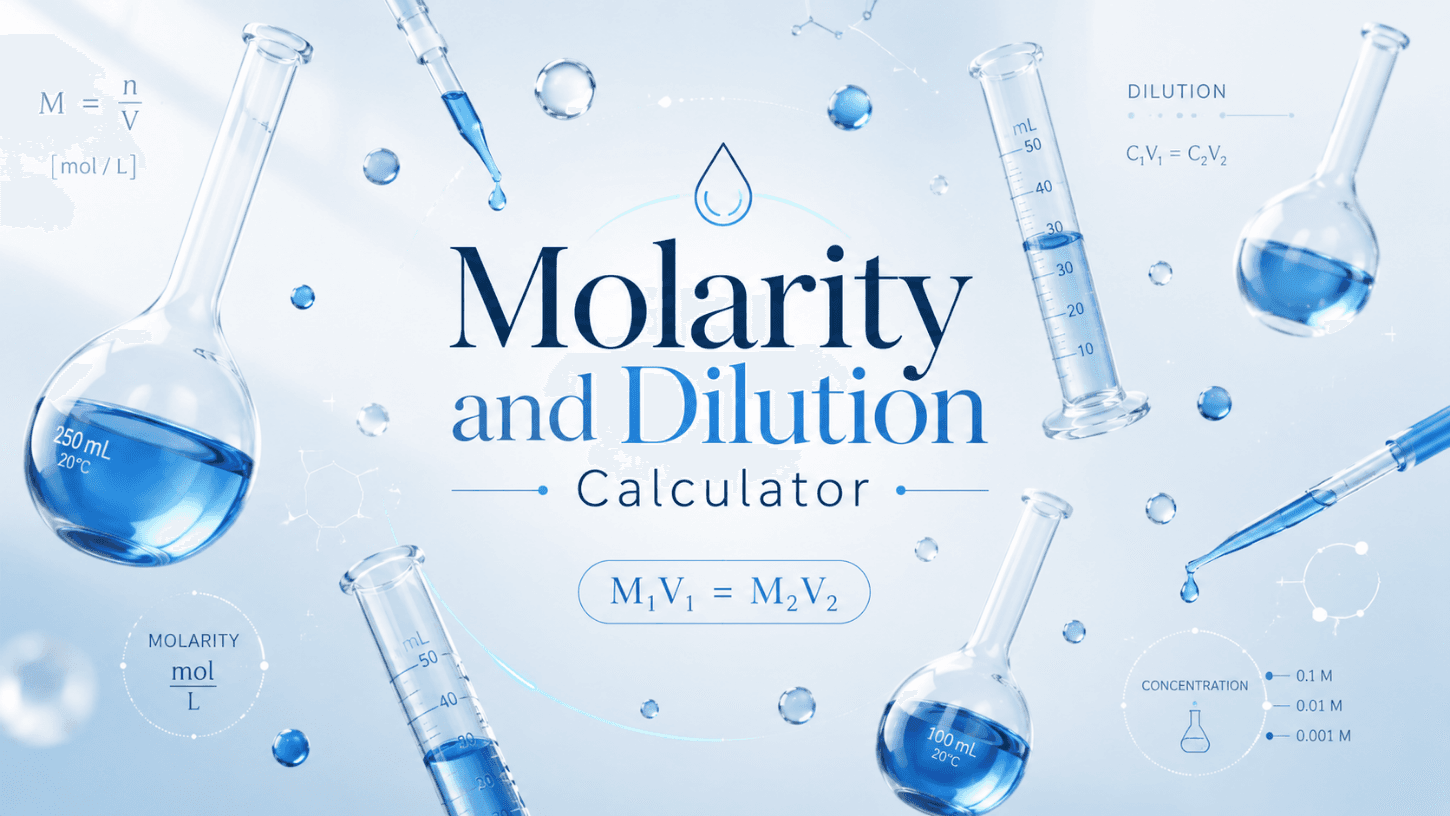
A free molarity and dilution calculator covering four essential lab calculations: C1V1=C2V2 dilution (solve for any unknown), molarity from mass, mass from molarity, and serial dilution table generation. Includes worked examples, a concentration units guide and step-by-step preparation instructions for every result.
Buffer Preparation Calculator
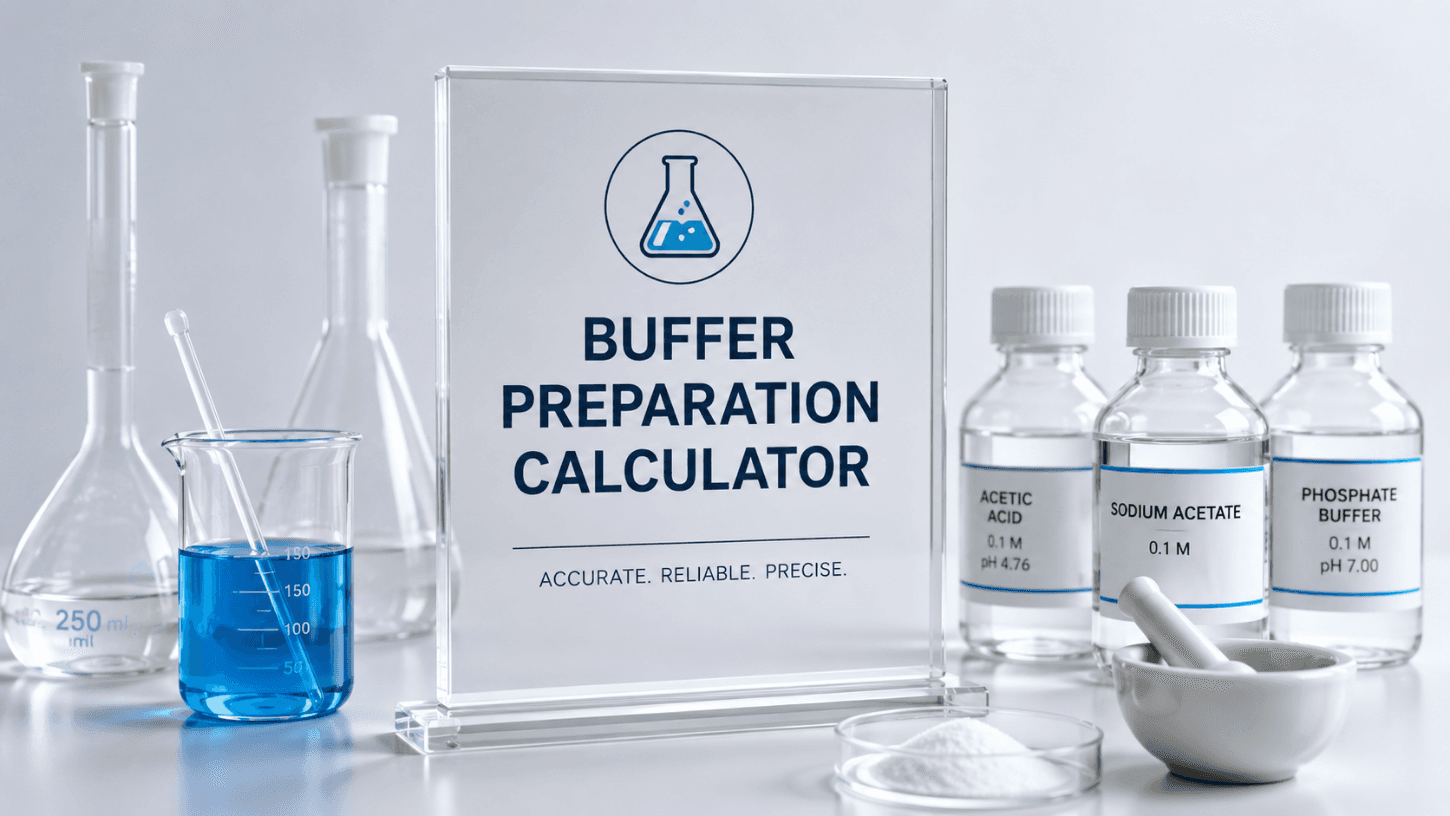
Free online buffer preparation calculator. Select your buffer system, enter target pH, concentration and volume, and get an exact lab-ready recipe with reagent masses and step-by-step instructions. Covers PBS, Tris-HCl, sodium phosphate, acetate, HEPES, MOPS and more.